Remember when you were a kid, you played with sand-built castles where you were either a king or a brave soldier? Or after watching Power Rangers, you played make-believe where you and your friends were a team that went against big bad guys? I do.
That’s basically what Dungeons & Dragons is — make-believe with rules, played around a table, for grown-ups who haven’t lost the urge. Unlike most games, there’s no winning or losing — the goal is to write a story together.
Take any fantasy world — Middle Earth, the world from Eragon, Westeros, or one nobody has dreamed up yet — and D&D lets you step into it as a character of your own making.
The mechanical definition
Dungeons & Dragons is a Tabletop Role-Playing Game (TTRPG). A small group of players role-play their Player Characters (PCs) in a world designed and narrated by a Dungeon Master (DM — in other TTRPGs the same role is called the Game Master). Players say what their characters do — fight a dragon, haggle with a shopkeeper, sneak past a trap — and the DM narrates how the world responds.
Here’s what a session actually feels like. Five of you sit around a table — or on a Zoom call, with snacks nearby. One of you is the DM. The DM describes a scene: maybe a tavern in a port city, smelling of smoke and wet wood. You say what your character does — “I walk up to the bartender and ask if she’s heard anything strange tonight” — and the DM responds in the bartender’s voice. Sometimes the action is risky enough that you need to roll dice. Most of the time, you’re just talking.
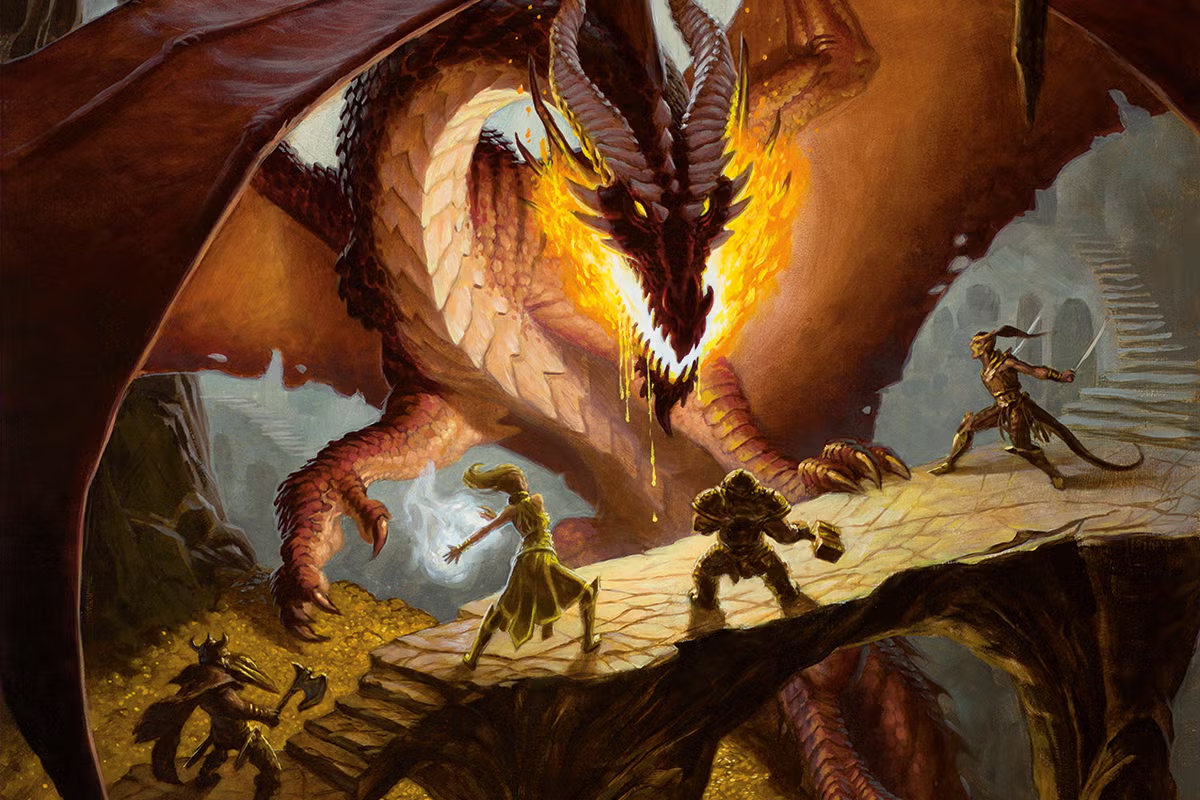
Which brings us to the dice. Say the bartender mentions a dragon hoarding gold up in the hills, and your party decides to go after it. You can’t just declare “I sneak into its lair and walk out with the gold,” or “I draw my magical longsword and slay it single-handedly” — that would make for a very boring story. Every character has stats: how strong they are, how clever, how charming, how lucky. Whenever something risky happens, you roll a d20 (the iconic twenty-sided die) and add the relevant stat.
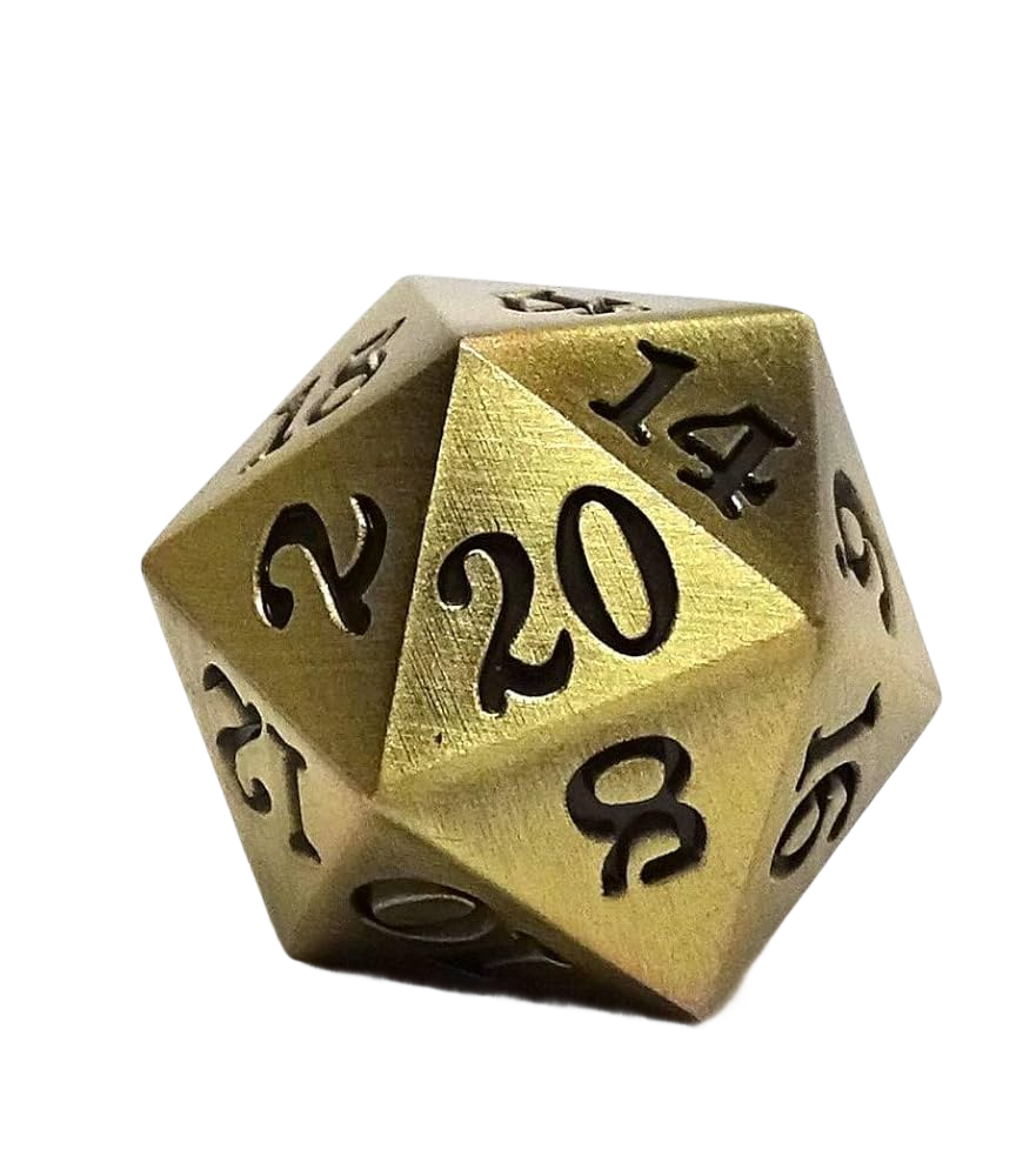
The dice can betray you. Your level-12 paladin can swing at a goblin and miss because the d20 rolled a 2. That uncertainty is the whole point. Real life doesn’t promise that the brave succeed and the cowardly fail — sometimes you do everything right and still get knocked down. D&D bakes that in, and it’s what keeps the game interesting session after session.
I got introduced to D&D at a Chennai board games café — House of Games in Kilpauk, since rebranded as Chamber of Games in Navalur. They put me in touch with a DM named Agnitor (his gametag), and I’ve been hooked ever since. I owe them more than they probably know. My good friend Kratos calls us both psychopaths for how obsessed we are with the game — though, between us, he’s the worse offender.
D&D became my escape from the often harsh realities of the world — a way to collaborate on mind-bending stories with people I came to love. I’m now in a handful of long-running campaigns at once, and I DM my own games every now and then. The campaigns can run for years, building toward a final clash with the BBEG, and the friendships often outlast the characters.
That’s why D&D doesn’t have winners or losers. Your character dying can become a great emotional beat in the story. The goal is to write a great story together, create beautiful moments, and bring something to life that none of you could have written alone.
A few entry points if you want to learn more or try it for yourself:
If you’re curious what D&D actually sounds like, Critical Role is a group of voice actors who play on camera. I’ve been listening to them for years, and they’re a big part of why I stayed obsessed. Their campaign playlist on YouTube is a good place to start.
If you’re in Chennai and want to actually play, reach out to DM Teerrexx — a wonderful DM, and the one who taught Agnitor.
Otherwise: walk into any board game café near you and ask around. Most of them have a regular D&D crowd, or know someone who does.